



 4 Min
4 Min In Conditions

Follow this topic

Bookmark

Record learning outcomes
Ear problems are common. They can affect children and adults, and range from earwax blockages to bacterial infections.
Many ear conditions clear up on their own with pharmacy products and self-help advice, but they can still cause discomfort, affect hearing and interfere with day-to-day life. It is therefore important that pharmacy teams are able to identify the cause of specific symptoms and recommend suitable management approaches.
Tinnitus
One in three people get tinnitus at some point in their lives. Tinnitus is the sensation of hearing sounds without an external source, such as ringing, buzzing, hissing, whistling or other noises.
Everyone experiences tinnitus differently. Symptoms often come and go, and the volume of the sounds can change from one episode to the next, but one in seven people have tinnitus that does not go away.
Some people don’t mind having tinnitus and learn to cope with it, whereas others feel upset or annoyed by the sounds, which in turn can affect their mental health.
Tinnitus is caused by brain activity that is out of normal balance, and may be due to age-related changes in the inner or middle ear. The condition may also be triggered by other changes in the ear, such as an ear infection, a cold or a build-up of earwax, or from loud external noise over a long time, such as live music or noisy machinery.
Some people experience tinnitus during a period of intense stress – the tinnitus may then stop when the stress is over.
“Although there’s no single cure for tinnitus, a range of treatments can help manage symptoms effectively,” says Dr James Stevenson, associate clinical director at Bupa Health Clinics.
“Management usually focuses on identifying and addressing any underlying cause, such as impacted earwax or an ear infection. Supportive options, including sound therapy, hearing aids and relaxation techniques, may also help to reduce how intrusive the sounds feel. If tinnitus is affecting day-to-day life, it’s important to seek advice from a healthcare professional for further assessment and support.”
“Stress and anxiety can make existing tinnitus worse”
Otitis externa (outer ear infection)
Otitis externa is a common infection that causes inflammation of the ear canal, which is the tube between the outer ear and the eardrum.
Around one in 10 people (especially women and adults aged 45 to 75) will have otitis externa at some point in their lives. Usually only one ear is affected.
Most cases are caused by a bacterial infection, although occasionally the symptoms may be due to irritation, a fungal infection or allergies.
Otitis externa is often called ‘swimmer’s ear’ because regularly getting water inside the ear can make inflammation more likely. The moisture also provides an ideal environment for bacterial growth.
Symptoms of otitis externa include itching and irritation around the ear canal, ear pain, redness, swelling and discharge, a feeling of pressure and fullness inside the ear, tenderness when moving the ear or jaw, swollen and sore glands in the throat, and some hearing loss.
“While a middle ear infection typically causes acute pain deep within the ear due to infection behind the eardrum, swimmer’s ear tends to present with pain and discharge from the ear itself, or persistent itching,” says Dr Alia Fahmy, medical director and Concierge GP at conciergemedical.co.uk.
Swimmer’s ear usually clears up within seven to ten days with treatment, although occasionally it can persist for several months.
“The mainstay of treatment is medicated ear drops or a spray, typically combining an antibacterial, a mild anti-inflammatory and an antifungal agent,” says Dr Fahmy.
“This three-pronged approach tackles the infection while easing discomfort and reducing the risk of fungal involvement. For those who find themselves prone to swimmer’s ear, prevention is well worth the effort.
Wearing well-fitted wax earplugs during swimming can help keep the canals dry, and gently drying the ear canal afterwards with a hairdryer on a cool setting is a simple but effective habit to adopt.”
A perforated (ruptured) eardrum
A perforated eardrum is a small hole or tear in the eardrum (the membrane separating the ear canal from the middle ear).
It may start suddenly after an ear infection, injury, loud noise or sudden change in air pressure (which happens when flying on a plane).
“The presentation is often quite distinctive,” says Dr Fahmy. “Sufferers typically describe severe, acute ear pain that suddenly disappears, a pattern that is almost characteristic of the condition.
The pain builds as pressure mounts against the eardrum, and its abrupt relief signals that the membrane has perforated. In cases where an underlying infection was present, a small amount of discharge may be noticed at the moment of rupture.”
A perforated eardrum usually gets better on its own, and hearing returns to normal, but some people need antibiotics to treat or prevent an associated ear infection while the eardrum heals.
They can take analgesics for the pain and must keep their ear dry when washing their hair or bathing. Sometimes, surgery to repair the eardrum (called myringoplasty) may be needed if the eardrum isn’t healing by itself.
“The first step in treating a perforated eardrum is diagnosis,” says Darren Horne, expert audiologist at Boots Hearingcare.
“A GP will use an otoscope to examine the ear and spot any tears or holes in the eardrum. Perforated eardrums generally heal on their own within a few weeks, so immediate treatment may not always be necessary.
However, speaking with a GP is key to understanding the underlying cause and assessing whether treatment is required.”
How the ears work
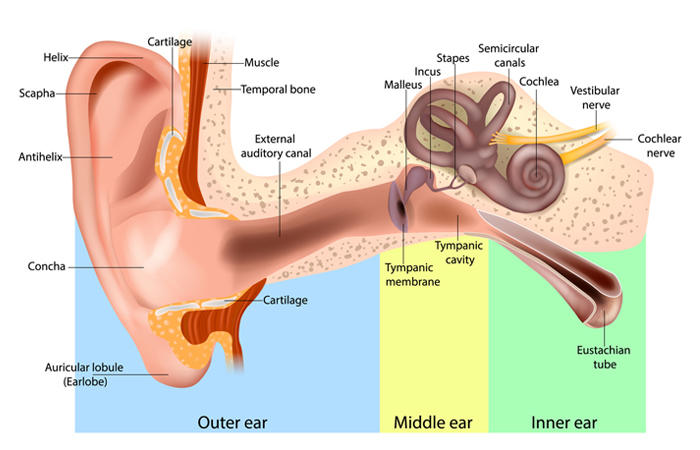
Ears are important for hearing and balance. They have three parts: the outer ear, middle ear and inner ear. The outer and middle ears are responsible for hearing only, while the inner ear is also responsible for balance and orientation.
- The outer ear is made up of the pinna (the fleshy part on the side of the head), the tube-like ear canal and the outer part of the eardrum. The first part of the ear canal is lined with fine hairs and earwax, which stops dust and dirt from entering deeper into the ear
- The eardrum is a thin, round, skin-like membrane that stretches across the ear canal. It vibrates in response to sound waves, which are then amplified to the middle ear. The louder the sounds, the bigger the vibrations
- The middle ear (an air-filled space behind the eardrum) contains tiny bones called ossicles – the malleus (hammer), incus (anvil) and stapes (stirrup). When the eardrum vibrates, the ossicles move backwards and forwards. This movement transfers sound from the eardrum to the inner ear
- The Eustachian tube connects the middle ear to the throat and the back of the nose. When we yawn or swallow, the Eustachian tube opens, allowing air into the middle ear and equalising the pressure on both sides of the eardrum
- The inner ear contains the cochlea (hearing organ) and the vestibular system (balance organs). The fluid-filled cochlea looks a bit like a snail shell. It is lined with thousands of tiny sensory hair cells (nerve endings). When sound waves enter the cochlea, the hair cells trigger electrical impulses that move along the acoustic (auditory) nerve to the brain
- The vestibular system contains fluid-filled semicircular canals and sensory organs that detect body movements and head positioning and send signals to the brain. The brain uses this information alongside vision cues and sensors in the muscles and joints to maintain the body’s balance effectively.
“A perforated eardrum usually gets better on its own, and hearing returns to normal”
Otitis media
Earache (otitis media) is one of the most well-used Pharmacy First clinical pathways, with parents in particular seeking advice and treatment for their child’s symptoms.
“Middle ear infection, known as otitis media, affects the space behind the eardrum,” says Dr Stevenson.
“An infection in this part of the ear is commonly associated with colds or upper chest infections. It can also be caused from diving. In young children, middle ear infection symptoms may present themselves in a few ways, including ear pulling, irritability, disturbed sleep and fever.
Some children may also have temporary hearing reduction or appear less responsive to sounds than usual.”
Research conducted by the UK Health Security Agency’s (UKHSA) Primary Care and Interventions Unit in partnership with Cardiff University, published in the British Journal of General Practice in March, found that one in three parents believe children always need antibiotics for ear infections, even though ear infections often get better on their own within three to seven days.
Research suggests that only around one in five children are likely to require antibiotics for an ear infection. The recommended management approach is paracetamol or ibuprofen to relieve pain and a high fever, along with placing a warm cloth on the ear to ease any discomfort.
Earwax build-up
Earwax buildup can cause discomfort, hearing loss, fullness in the ear, earache, dizziness and tinnitus. It’s a very common problem, especially in the under-fives and over-50s. “Earwax can dry out when you age,” says Dr Stevenson.
“This, teamed with rougher hairs within the ears, makes it harder for the ears to get rid of wax. Men tend to have hairier ears than women, which puts them at greater risk of build-up.”
People with narrow or irregular-shaped ear canals may be more prone to earwax build-up. Using in-ear headphones, earplugs or anything that pushes wax deeper into the ear, such as cotton buds, can make the build-up worse.
In March 2025, the RNID’s Stop the Block report revealed that many people are struggling to find free NHS earwax removal services. Other people attempt to manage earwax themselves at home without any clear guidance from healthcare professionals.
Olive oil or sodium bicarbonate ear drops, available over-the-counter, may help to soften the wax and help to reduce the build-up.
“Many patients try pharmacy products first, but for some people, symptoms persist,” says Mark Ferguson, consultant ENT doctor and rhinology surgeon at LondonRhinology.co.uk.
“Microsuction is a safe and precise method performed under direct vision using a microscope. It is the gold standard for removing wax or debris without introducing water into the ear.”
Eustachian tube dysfunction
Eustachian tube dysfunction causes dulled hearing and a feeling of pressure or fullness in the ear, often accompanied by muffled hearing, popping or crackling sensations. Some people also experience mild pain or discomfort that comes and goes.
“Many people say it feels as though their ears simply won’t ‘clear’,” says Mark. “Eustachian tube dysfunction is almost always linked to inflammation around the back of the nose, where the tubes open.
That inflammation may come from allergic or non-allergic rhinitis, viral infections or sinus problems. Anything that causes swelling in this area can stop the tubes from functioning normally.”
The symptoms may last from just a few hours to several weeks, depending on the cause. “The initial treatment can just be supportive if the cause is a viral infection with the common cold,” says Mark.
“As the cold resolves, so will the symptoms. But if the cause is due to inflammation driven by rhinitis, often a weak intranasal steroid is the first-line treatment. This can be bought over-the-counter in discussion with a pharmacist.
“Using a short course (no more than five days) of a nasal decongestant can be helpful, particularly if a patient is flying. Persistent pressure, hearing changes or long-standing discomfort should always be assessed by an ENT specialist.”
Looking after ears
Looking after the ears – inside and out – can help to prevent some ear conditions and reduce the risk of hearing loss. Here are some tips to pass on to customers:
- Use headphones at safe volumes by following the 60/60 rule – listen to music for a maximum of 60 minutes at a maximum volume of 60 per cent, then give the ears a rest
- Wear noise-cancelling headphones or muff-type headphones, as these block out background noise more effectively than in-ear headphones
- Wear hearing protection (e.g. ear plugs or earmuffs) for very loud activities, such as motorsports, noisy equipment (e.g. drills or electric saws) and live music
- Avoid getting shampoo or water in the ears when having a bath or shower; if this is difficult, put cotton wool smeared with petroleum jelly into the ears to protect them
- When swimming, wear ear plugs or a swimming hat over the ears – make sure ear plugs fit properly and have a good seal so water can’t get in
- Avoid inserting objects (such as cotton buds or fingers) into the ear – ears are
self-cleaning - Avoid scratching or picking at skin inside the ear – this can cause or worsen eczema or dermatitis
- When out in the sun, put sunscreen on the ears, but avoiding getting any in the
ear canal.
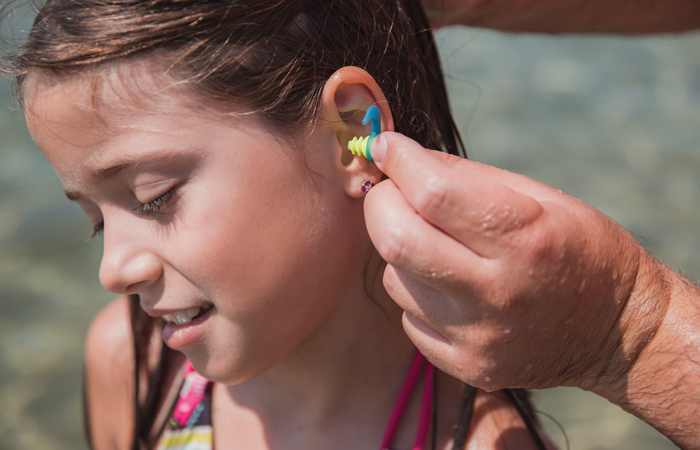
Swim ear plugs can help stop water getting into the ears, preventing ‘swimmer’s ear’.
“One in three parents believe children always need antibiotics for ear infections”

Share:


In Conditions